NIPT Gender is the simplest version of the NonInvasive Prenatal Test (NIPT), designed for parents who primarily want to know their baby’s sex early in pregnancy.
NIPT Basic is the entrylevel NonInvasive Prenatal Test designed to screen for the most common chromosomal conditions in pregnancy.
NIPT Standard is a more comprehensive version of the NonInvasive Prenatal Test, designed for parents who want deeper insights into their baby’s chromosomal health.
NIPT Plus is an advanced version of the NonInvasive Prenatal Test (NIPT) designed to give expecting parents the most comprehensive view of their baby’s chromosomal health.
Covers breast, ovarian, colorectal, prostate, pancreatic, gastric, melanoma, endocrine, and more.
BRCA1/2 and related genes for breast and ovarian cancer risk.
Genes linked to inherited prostate cancer risk.
Genes associated with inherited pancreatic cancer risk.
Genes for Lynch syndrome and other colorectal risks.
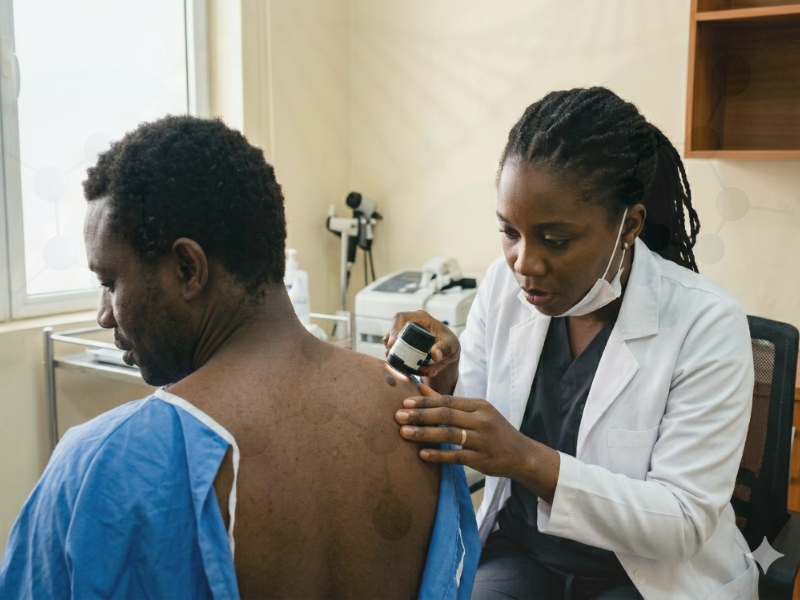
Skin cancer is often misunderstood in Africa, with many people believing it only affects individuals with lighter skin tones. However, melanoma, which is the most aggressive form of skin cancer, can also affect people with darker skin. Unfortunately, because awareness remains low, many cases in Nigeria are detected at later stages when treatment becomes more difficult.
Understanding the early signs of melanoma and knowing whether genetics or family history may increase your risk can help you take proactive steps toward better health.
At Syndicate Bio, we believe that education, early detection, and access to genetic insights can help individuals and families make more informed healthcare decisions.
Start by taking the Free Family Cancer Risk Assessment Quiz — takes just 1 minute
Melanoma is a type of skin cancer that develops in melanocytes, the cells responsible for producing skin pigment. Although it is less common than other forms of skin cancer, melanoma can spread quickly to other parts of the body if not detected early.
According to the World Health Organization, early detection plays a major role in improving survival outcomes for skin cancer patients worldwide.
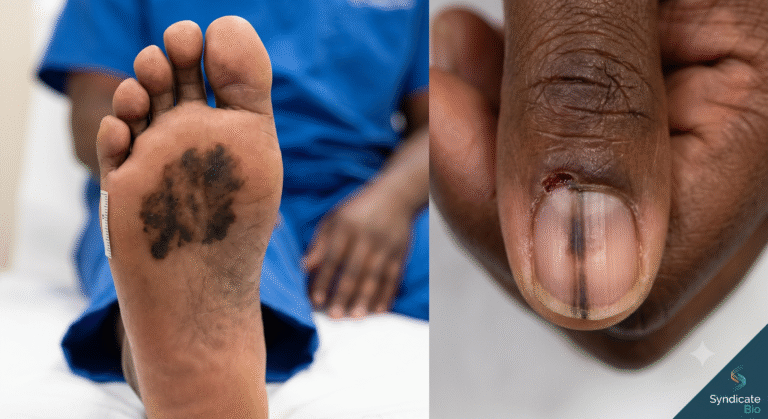
In individuals with darker skin, melanoma may be seen in the following areas and not limited to sun-exposed areas:
Most people may not immediately recognise the warning signs of skin cancer. In some cases, suspicious skin changes are mistaken for infections, injuries, or ordinary skin conditions. Recognising possible symptoms early is one of the most important steps in melanoma prevention.
A helpful method doctors use is the ABCDE rule:
Other warning signs may include:
If you notice any persistent or unusual skin changes, it is important to seek medical evaluation promptly.
Yes. While environmental factors can contribute to skin cancer risk, genetics can also play a role.
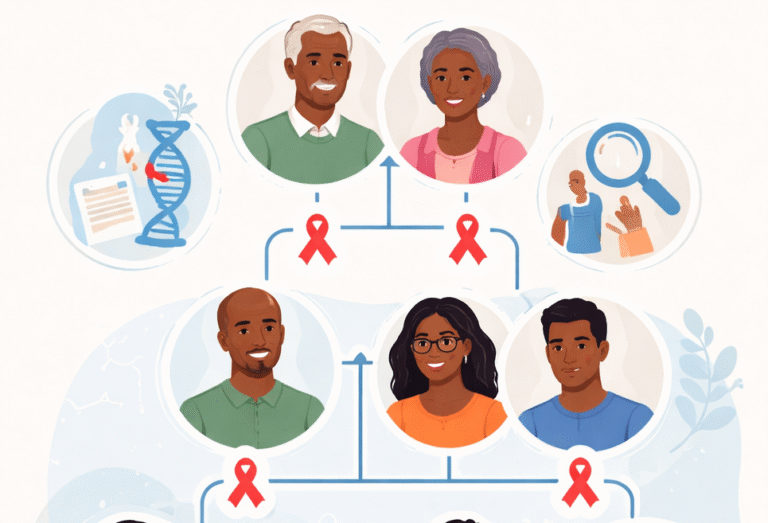
Some individuals inherit gene mutations that increase their likelihood of developing melanoma. This is known as hereditary melanoma.
A person may have a higher hereditary cancer risk if:
Certain inherited mutations, including changes in genes like CDKN2A, have been linked to increased melanoma risk.
Understanding your family history can help identify whether genetic testing or earlier screening may be beneficial.
You can also read our article on Family Cancer Risk and Hereditary Cancer Screening to learn how inherited conditions can affect long-term health decisions.
Genetic testing can help identify inherited mutations associated with hereditary cancers, including melanoma. You may benefit from speaking with a healthcare professional or genetic specialist if you:
Have a family history of melanoma or skin cancer
Notice suspicious skin changes
Have a personal history of unusual moles or skin lesions
Want a clearer understanding of your hereditary cancer risk
Early awareness can help individuals make proactive decisions about screening and prevention. Speak with a specialist to learn more about available screening and genetic testing options.
Melanoma in Nigeria is still under-recognised, but awareness is growing. Skin cancer can affect people of all skin tones, and early detection remains one of the most effective ways to improve outcomes. Understanding your genetic profile is information that can help guide smarter health decisions for you and your family.
Your family history is a roadmap, not a diagnosis. Early awareness could make a life-saving difference for you and your loved ones.
WhatsApp us