Can Cancer Run in Families? How Family Cancer Risk Can Impact Your Health Decisions

African family across generations discussing health and family cancer risk together

Understanding your family medical history is one of the most proactive steps you can take to protect your long-term health. 

While lifestyle factors like diet and exercise are vital, your hereditary cancer risk, the specific gene mutations passed down through generations, can quietly influence your likelihood of developing certain conditions. 

Even if you currently feel healthy, mapping out your lineage can reveal a genetic predisposition to cancer that may not be immediately obvious.

Recognising these patterns early gives you the power to shift from reactive to proactive care. 

Don’t leave your health to chance

Complete the Free Family Cancer Risk Assessment Quiz — takes just 1 minute

In Nigeria, there are various familial cancer syndromes that predispose individuals to certain cancers, often at younger ages and across multiple generations. Some of these include Lynch Syndrome, which increases the risk of colorectal, endometrial, ovarian, and other gastrointestinal cancers; Familial Adenomatous Polyposis (FAP), caused by APC mutations and associated with hundreds of colon polyps that almost inevitably progress to colorectal cancer if untreated, as well as increased risks of duodenal, thyroid, pancreatic, and childhood liver cancers; and Li‑Fraumeni Syndrome, linked to TP53 mutations and known for causing early‑onset breast cancer, sarcomas, brain tumors, leukemia, and adrenal cancers. 

Other important inherited conditions include Hereditary Breast and Ovarian Cancer Syndrome (HBOC)—driven by BRCA1, BRCA2, and related genes—which raises the risk of breast, ovarian, prostate, and pancreatic cancers; and Birt‑Hogg‑Dubé Syndrome, caused by FLCN mutations and associated with kidney cancers and lung cysts. In addition to these syndromes, there are various germline mutations—such as those in BRCA1, BRCA2, APC, TP53, PALB2, and others—that can be inherited and contribute to cancer risk across families.

By identifying a hidden family cancer risk through your family tree, you gain the clarity needed to pursue targeted genetic testing, personalised early screenings, and informed lifestyle adjustments.

Take Action Now. Don’t leave your health to chance. Complete the Free Family Cancer Risk Assessment to see what your family history reveals. It takes just 1 minute and provides immediate, actionable insights

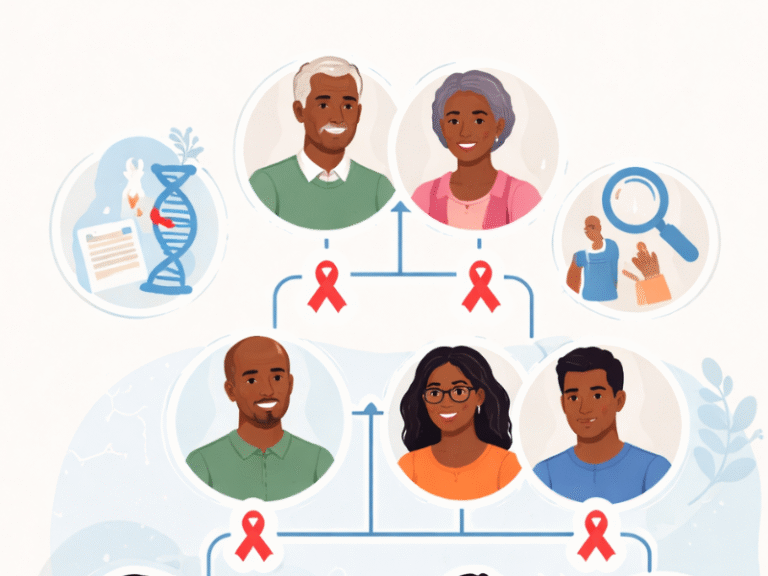
Family tree diagram showing patterns of family cancer risk across generations

Why Your Family Medical History Matters for Cancer Prevention

Many cancers, such as breast, ovarian, colorectal, and prostate cancer, can have a hereditary component. If multiple family members have had cancer, or someone was diagnosed at a younger age than usual, it could indicate a genetic predisposition.

Research from the World Health Organization suggests that early identification of genetic risk factors significantly improves long-term outcomes for many cancer types

Knowing your family history allows doctors to:

  • Identify patterns of cancer that might run in your family
  • Recommend early and personalised screenings
  • Suggest genetic testing to clarify your risk (see our testing options here: Syndicate Bio Genetic Tests)

By acting on this knowledge, you could detect cancer earlier, when treatment is more effective, or even prevent certain cancers through proactive care.

Signs of Hereditary Cancer: What to Look For When Assessing Family Cancer Risk

When reviewing your family medical history, it’s important to consider:

Close relatives with cancer (parents, siblings, children, grandparents, aunts)

Multiple cancers on the same side of the family

Early-onset cancer (diagnosed before age 50)

Rare types of cancers or multiple primary cancers in one person

Patterns like these don’t guarantee you’ll develop cancer, but they signal the need for informed action

For a clear, simple first step, you can take the Family Cancer Risk Assessment and get immediate guidance.

Genetic Testing Options to Manage Your Family Cancer Risk

If your assessment indicates a higher risk, genetic testing can confirm whether you carry specific gene mutations linked to hereditary cancers. At Syndicate Bio, we offer testing options tailored to your family history:

  • Comprehensive Hereditary Cancer Test (~300 genes) – Covers breast, ovarian, colorectal, prostate, pancreatic, gastric, melanoma, and more, and all of the familial cancer syndromes
  • Hereditary Breast & Ovarian Cancer Test (50 genes) – Focused on BRCA1, BRCA2, and related genes.
  • Hereditary Colorectal Cancer Test (44 genes) – Covers Lynch syndrome and related colorectal cancer genes.

Not sure which test fits your situation? Chat with a specialist on WhatsApp for free personalised guidance: Click the button below to start the conversation.

Take Action: Reduce Your Family Cancer Risk Today

Even if no one in your family has had cancer, it’s worth taking a few minutes to assess your hereditary risk. With a quick quiz and expert guidance, you can gain clarity, peace of mind, and a proactive care plan

Your family history is a roadmap, not a diagnosis. Early awareness could make a life-saving difference for you and your loved ones.